
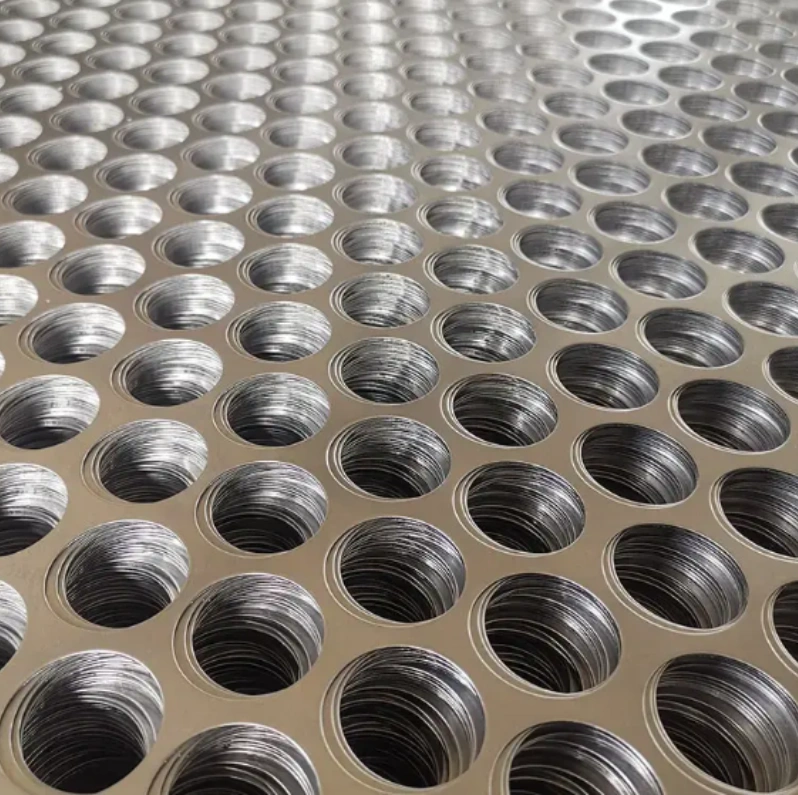
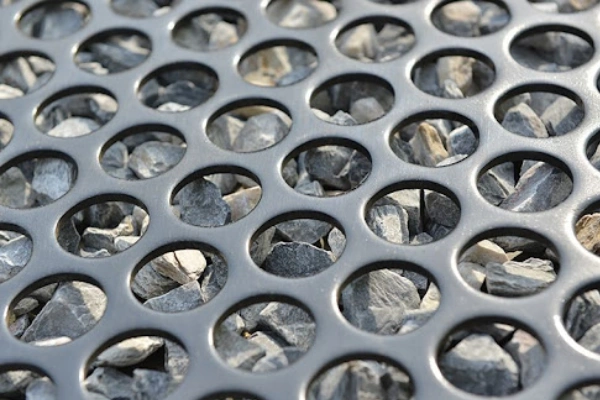

Perforated Screen Plate
CNC-punched from manganese or stainless steel with round (50-100mm) or square (100-200mm) holes. Smooth hole walls reduce material resistance. Ideal for 50-200mm non-sticky hard rock like granite, basalt, and limestone.
Product Detail
Superior Material Flow: The smooth, burr-free hole walls significantly reduce material passage resistance compared to fabricated or woven screens. This minimizes particle hang-up and wear on the screen surface, maintaining high throughput even with abrasive hard rocks. The solid monolithic plate construction provides excellent impact and abrasion resistance, making it ideal for primary scalping and heavy-duty applications.
Application-Specific Hole Geometry: Round holes deliver stable flow paths and eliminate the “corner trap” effect found in square patterns, reducing particle bridging. Round holes are optimal for spherical materials like pebbles. Square holes provide maximum open area for angular, blocky materials like limestone, where higher throughput is prioritized over precise stratification.
Corrosion & Customization Options: Stainless steel versions offer strong corrosion resistance, suitable for coastal or high salt-fog environments. The hole shape, size, and pattern can be customized as needed to fit non-standard screening machines, balancing hydraulic performance with mechanical strength requirements
Industry Applications

Mining & Quarrying
Ideal for 100-200mm granite and basalt scalping after primary crushing. The solid plate withstands high-impact feed, while smooth hole walls prevent hang-ups and accelerate material flow.
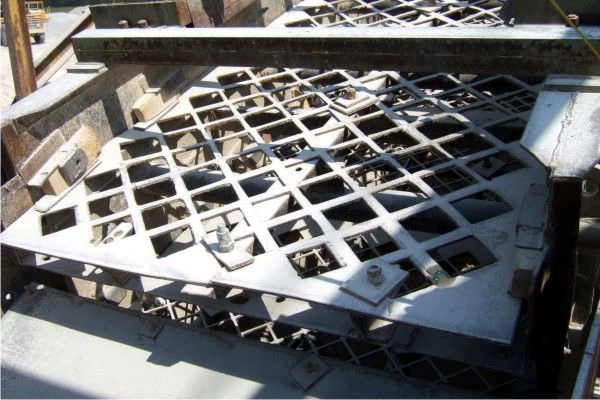
Aggregate Processing
Square hole configuration (100-200mm) maximizes open area for blocky limestone, delivering high throughput in dry classification applications before secondary crushing.
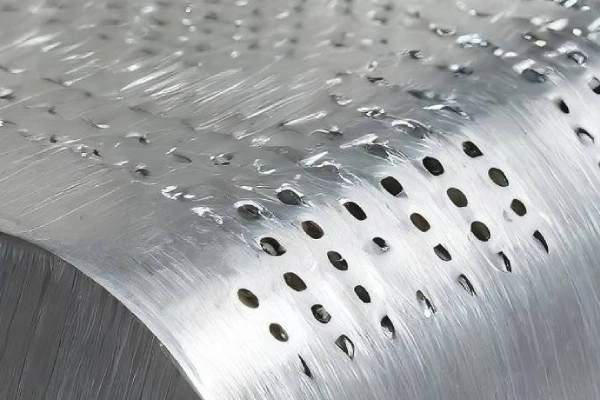
Coastal & Marine Environments
Stainless steel construction resists corrosion in coastal quarries or marine aggregate processing, where carbon steel plates would rapidly degrade.

FAQ
What is the advantage of perforated screen plates over woven wire or polyurethane screens for coarse materials?
For 50-200mm coarse, non-sticky hard rock, perforated plates offer superior impact resistance and dimensional stability. Woven wire screens can deform or break under heavy impact, while polyurethane may suffer reduced open area. The solid monolithic plate construction ensures minimal deformation and long service life in primary scalping applications.
How do I choose between round and square holes?
Round holes eliminate “corner trap” effects where particles can wedge, reducing bridging and making them ideal for spherical materials like pebbles or river gravel. Square holes generally offer higher open area percentages, maximizing throughput for blocky, angular materials like limestone where precise cut-point control is less critical than volume
What open area percentage can be achieved with perforated plates?
Open area depends on hole size, pattern (staggered vs. straight), and center-to-center spacing. Staggered (triangular) patterns provide higher open area and lower blinding risk than straight layouts. However, perforated plates typically have lower open area than woven wire—this is acceptable for coarse scalping, where durability is prioritized over fine fraction efficiency.
What is the maximum hole size available?
For the applications described (50-200mm material), round holes up to 100mm diameter and square holes up to 200mm are standard. Larger custom sizes can be manufactured depending on plate thickness and material. General engineering principles dictate that minimum hole diameter should not be less than the plate thickness to maintain structural integrity.
Is stainless steel necessary for all applications?
No. High manganese steel is cost-effective and provides excellent work-hardening properties for abrasive hard rock applications like granite and basalt. Stainless steel is recommended specifically for coastal environments, high salt-fog conditions, or when processing corrosive materials. For standard quarry operations in dry inland locations, manganese steel offers the best value.
Can the screen plate be customized for non-standard screening machines?
Yes. One of the core advantages of perforated plates is their adaptability. Hole shape (round, square, rectangular, slotted), hole size, pattern spacing, and overall plate dimensions can be customized to fit specific screening equipment. Edge treatments, mounting hole locations, and frame attachments can also be tailored to customer requirements.