
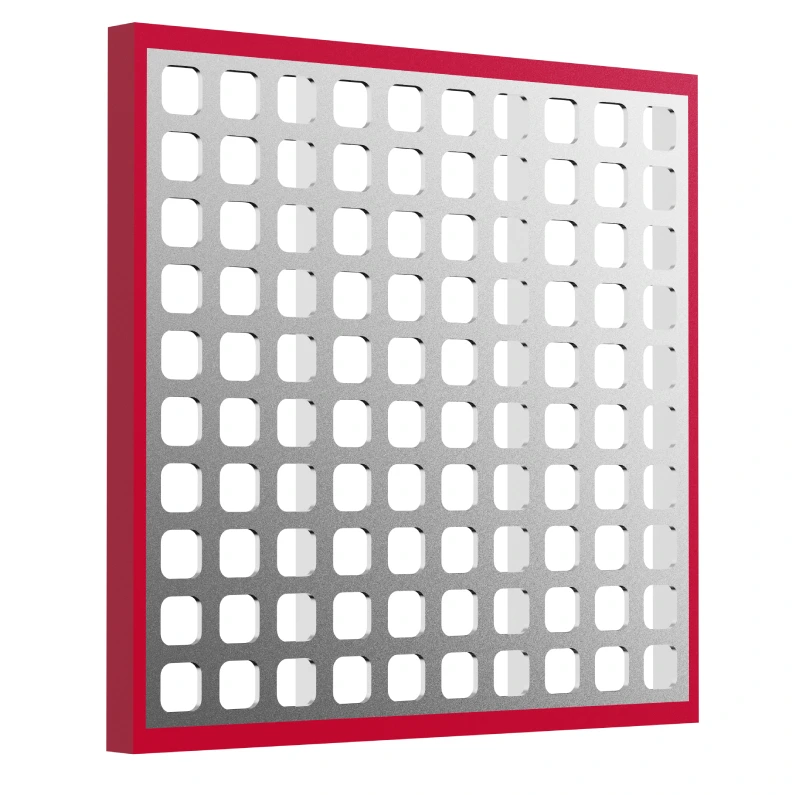
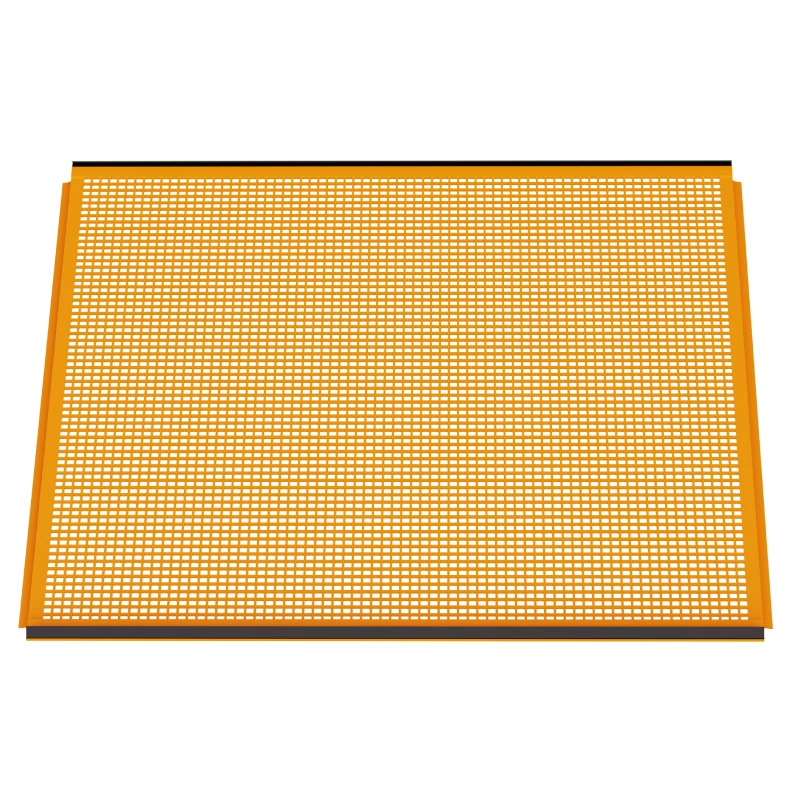
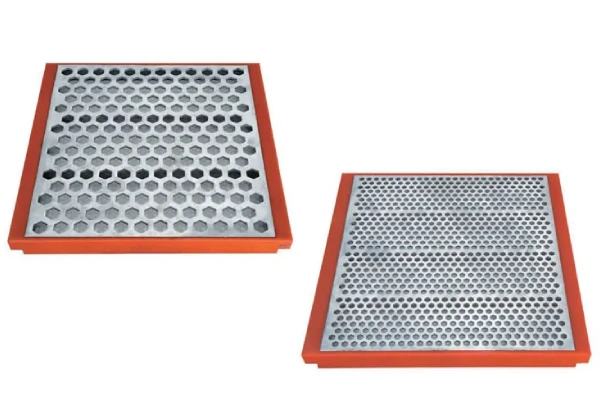
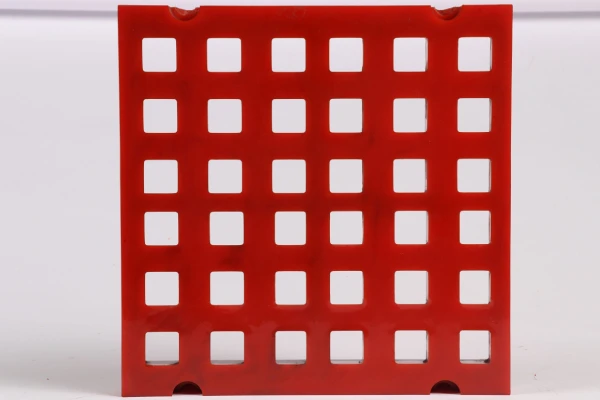
Large-Hole Screen Plate

The Large-Hole Screen Plate features wear-resistant or stainless steel base material with 100-1000mm square/rectangular openings. Single panel up to 2×3m. Achieves 85% sieving rate with 100% anti-clogging. Withstands 1000kg-class impact. Ideal for 200-1000mm extra-large material separation.

Product Detail

Exceptional Throughput & Anti-Clogging: The extra-large hole design achieves a sieving rate of up to 85% while providing 100% anti-clogging performance. The generous openings allow rapid separation of “large pieces from small pieces,” making it ideal for high-volume primary scalping where material classification speed is prioritized over precision.

Superior Impact Resistance: This product withstands impact from 1000kg-class extra-large materials without deformation or structural failure. The robust steel construction absorbs and dissipates massive impact energy, ensuring reliable operation in the most demanding mining and quarrying environments.

Corrosion & Size Options: Stainless steel versions offer excellent acid and alkali resistance, suitable for screening large acid-containing raw materials in the chemical industry. The large single-panel format (up to 2×3m) minimizes joints and reduces installation time on high-capacity screening equipment.

Industry Applications

Mining

Ideal for separating 200-1000mm extra-large mine waste rock from valuable ore. The 1000kg-class impact resistance handles direct feed from haul trucks while 85% sieving rate maximizes primary scalping efficiency.
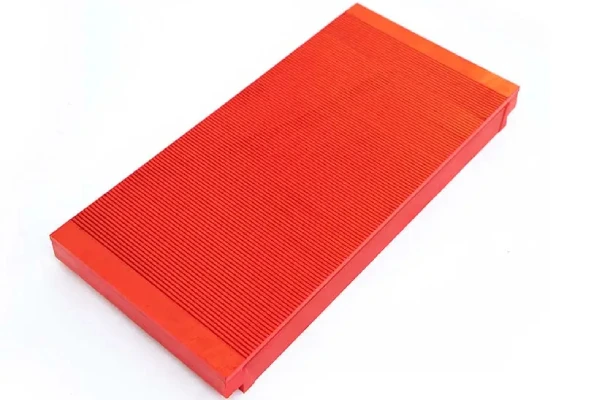
Construction & Demolition Recycling

Perfect for pre-screening concrete aggregates to remove oversized boulders before crushing. The 100% anti-clogging design ensures continuous operation even with irregular, flaky, or elongated large rocks.
Chemical Industry

Suitable for screening 200-1000mm acid-containing raw materials. Stainless steel construction resists chemical attack while extra-large openings handle bulky, corrosive feeds.

FAQ

Why does the title mention "Polyurethane Frame" while the description says steel base material?

This is a hybrid design. The screening surface and hole structure are formed from wear-resistant or stainless steel for maximum impact and abrasion resistance. The polyurethane component refers to the frame encapsulation or edge sealing that bonds the steel screen plate to the screening machine’s support structure. Polyurethane encapsulation provides three benefits:
Vibration damping between the steel plate and screen box
Corrosion protection at mounting points
Simplified installation with snap-in or bolt-through attachment systems
The result is a steel screen surface with polyurethane-framed edges for easier mounting and longer frame life.

Standard square/rectangular holes range from 100mm to 1000mm. For the 200-1000mm material size range described, hole sizes typically match or slightly exceed the maximum feed dimension. Custom hole sizes above 1000mm can be manufactured for specialized applications. The key principle is the ratio between hole size and material size: for 100% anti-clogging, hole dimensions should be at least 1.2× the maximum expected particle dimension in that orientation.

In practical terms, “100% anti-clogging” means the screen plate’s design eliminates the physical conditions that cause pegging or blinding in smaller-hole screens. With 100-1000mm openings, several factors prevent clogging:

  • Any particle that reaches the opening is either small enough to pass or large enough to ride over

  • No “near-size” range exists where particles are slightly larger than the opening

  • The large hole depth (plate thickness) doesn’t create wedging conditions

Field data confirms zero clogging-related downtime in properly sized applications, though occasional bridging can occur with extremely elongated or interlocking particles.

“1000kg-class” means the screen plate is designed to withstand impact from individual blocks weighing up to 1000kg (1 metric ton) falling from typical screen feed heights (0.5-1.5m). In practice, this allows direct feed from:

  • Haul trucks (dumped directly onto screen)

  • Front-end loaders with 5-10 ton buckets

  • Excavators placing oversized material

The combination of steel construction and thick cross-section absorbs the kinetic energy without permanent deformation. For applications with consistent 1000kg+ blocks, additional reinforcement or thicker gauge steel can be specified.

Installation requires overhead lifting equipment (crane or hoist) due to panel weight. For a 2×3m wear-resistant steel panel with typical thickness (6-12mm), weight ranges from 280-560kg. The polyurethane frame encapsulation provides attachment points for bolts, clamps, or wedge blocks. Replacement involves:

  1. Lifting old panel off screen deck using lifting eyes

  2. Placing new panel onto support beams

  3. Securing with bolts/clamps at designated attachment points (typically 8-12 per panel)

A two-person crew with proper lifting equipment can replace a 2×3m panel in 45-60 minutes.

Send a Message