
Polyurethane Fine Material Screening Series
High wear-resistance screening solutions for mining, coal washing, aggregates and dewatering applications. 3-5x longer life than wire mesh.
Polyurethane Screening
3-5X Longer Life
Significantly outlasts wire mesh and rubber screens
Non-Blinding Design
Tapered slots prevent material clogging
Low Noise
Reduces workplace noise compared to metal screens
Wet & Dry Screening
Excellent performance in both conditions
Our Product Series PU-Mesh Style and Welding Type
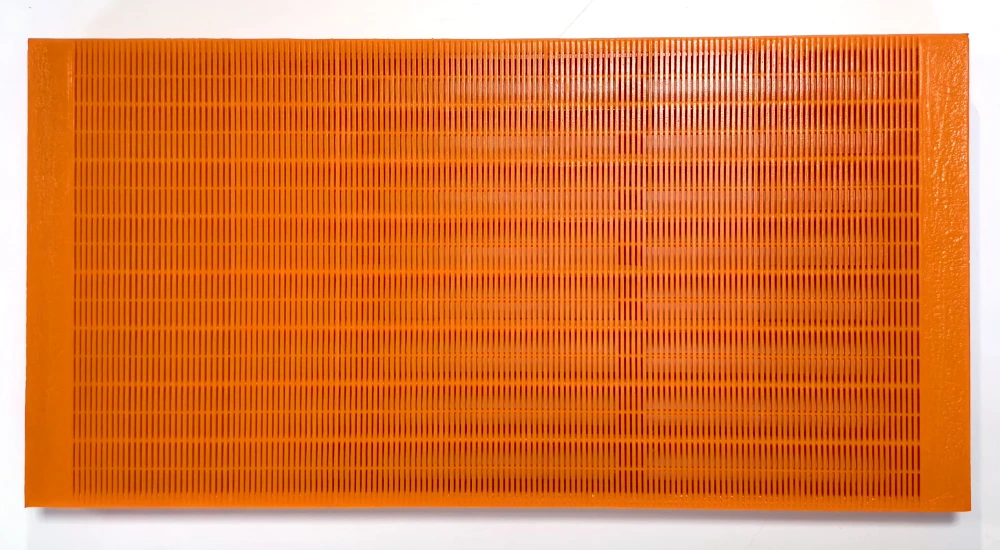
Full Slotted Screen Plate
Continuous long-slot design for high-precision fine particle separation under high-frequency vibration.
- High separation accuracy for fine minerals & chemical materials
- Permeability increases with wider slots and thinner wires
- Slot width range: 0.075mm – 3mm, open area up to 28%–45%
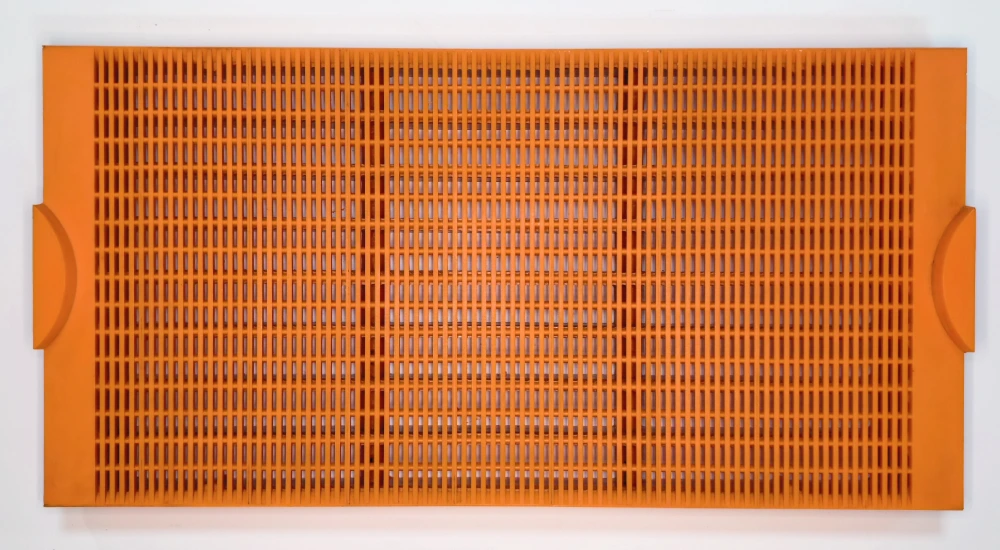
Through-Slotted Screen Plate
Through-type slot structure maximizes permeability and material flow for dewatering applications.
- Higher throughput than non-through plates at same slot width
- Accelerates fluid movement in mineral pulp and fine coal
- Slot configuration: 0.1mm–2.5mm slit width with optimized open area
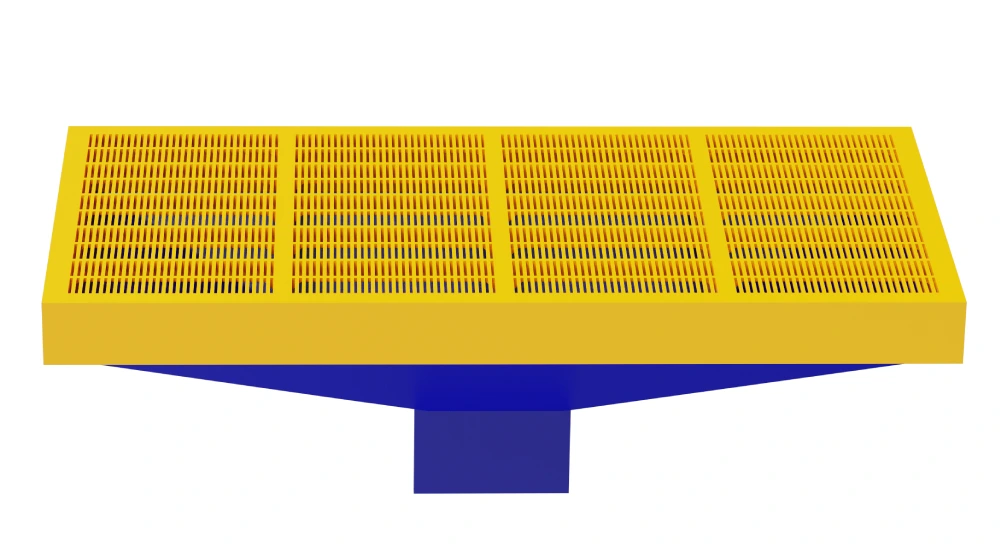
Non-Continuous Slotted Screen Plate
Intermittent slot design reduces blinding and handles irregular or sticky materials.
- Adapts well to irregular particle shapes
- Maintains long-term efficiency despite slightly lower permeability
- Aperture range: 0.2mm–80mm for mixed-size classification
Why Choose Us
Advanced Production
Large-scale casting machines, CNC mold processing, automated mixing systems
Quality Control
Raw material testing, hardness verification, dimensional inspection, wear resistance testing
High Capacity
Daily output of 500+ screen panels, fast lead time for bulk orders
Custom Manufacturing
Any size, slot width, frame type, or mounting style available
FAQ
How does it differ from a standard full slotted plate?
The through-type structure optimizes bar layout and support, achieving 20%–30% higher permeability than non-through plates at the same nominal slot width.
What is the recommended operating temperature range?
The polyurethane material performs reliably between -30°C and +120°C, suitable for most wet processing environments.
Does the non-continuous design reduce throughput?
Permeability is slightly lower than continuous designs, but the anti-blocking benefit ensures stable long-term efficiency, often resulting in higher overall throughput over extended runs.
What materials is it best suited for?
Ideal for fine minerals (e.g., iron ore fines, non-ferrous metal concentrates) and chemical raw materials requiring precise classification.
