
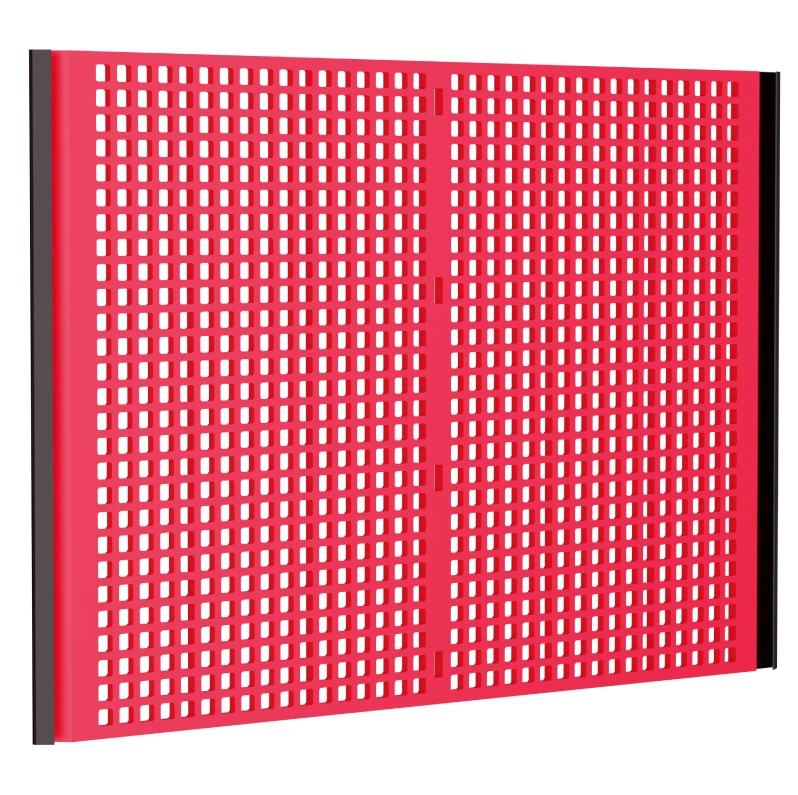
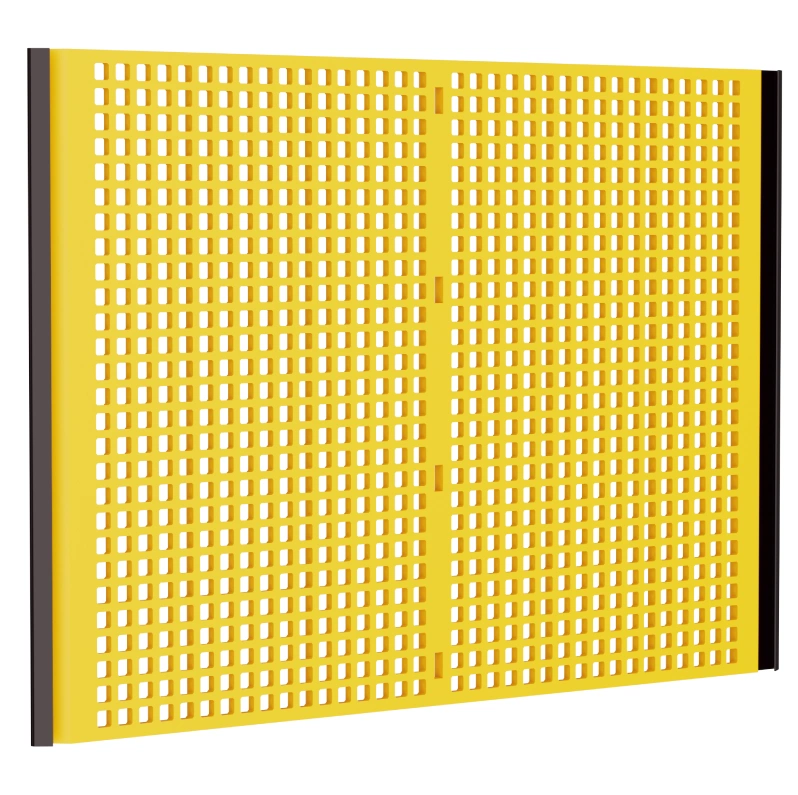
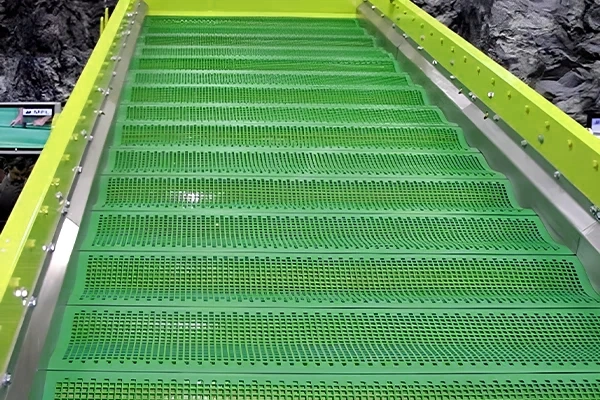

Flip-Flow Screen Panel
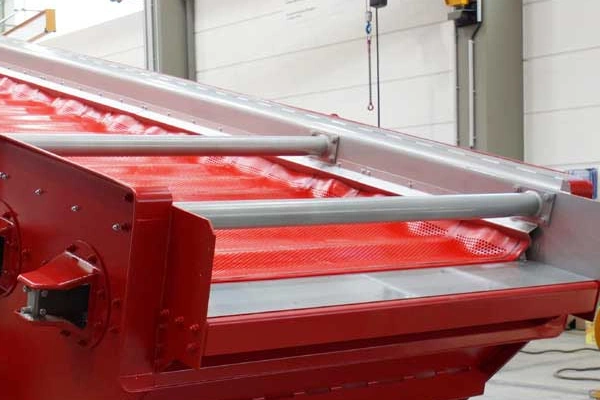
The Flip-Flow Screen Panel features a polyurethane screen surface with metal frame and elastic connectors. Asynchronous vibration (5-8mm amplitude, 50-60Hz) creates tension-relaxation motion, achieving 85-95% sieving rate—1.5x higher than conventional screens. Ideal for sticky materials with >20% moisture content.
Product Detail
Superior Sieving Rate: The tension-relaxation mechanism creates a “trampoline effect” that accelerates material stratification . For 30-150mm sticky coarse materials such as lignite and clay-bearing iron ore, the sieving rate reaches 85-95%—1.5 times that of ordinary screen plates. The rubbing force generated by the tension-relaxation motion breaks mud clumps on material surfaces, preventing mud layers from covering screen openings . This makes it especially suitable for difficult-to-screen materials with moisture content exceeding 20% .
Enhanced Durability & Efficiency: The polyurethane screen surface offers wear resistance 1.5 times that of rubber. The modular design (single panel size up to 1200×600mm) allows replacement of individual panels in just 5-10 minutes, improving maintenance efficiency by 60% . The tension-relaxation motion generates instantaneous acceleration up to 30-50g, effectively preventing material adhesion . Operating noise is ≤85dB, 15-20dB lower than metal screen plates.
Wide Application Range: This screen panel is widely used in the coal industry for lignite coarse classification and dewatering , in metal mining for pre-screening of muddy coarse materials (such as copper ore and iron ore desliming), and in environmental protection for coarse material separation before waste incineration (removing sticky plastics and kitchen waste mixtures) .
Industry Applications

Coal Industry (Lignite Classification & Dewatering)
Ideal for 30-150mm lignite coarse classification and dewatering. Handles >20% moisture content without blinding. The tension-relaxation motion prevents sticky fines from adhering to the screen surface, maintaining continuous operation in wet coal preparation plants
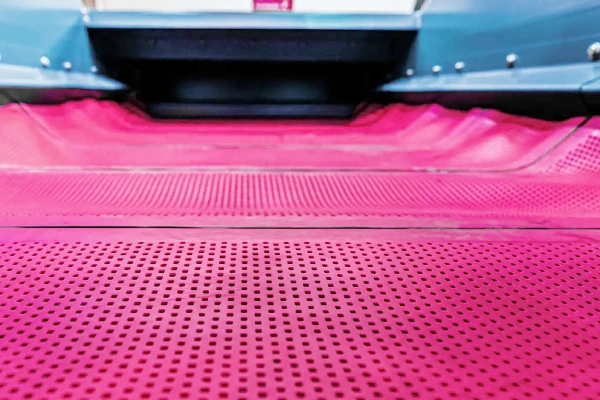
Mining & Mineral Processing (Ore Desliming)
Perfect for pre-screening of 30-150mm iron ore and copper ore with high clay content. The 30-50g instantaneous acceleration effectively breaks mud clumps, achieving efficient desliming and reducing downstream equipment wear .
Environmental Protection
Suitable for separating sticky plastics, food waste mixtures, and construction debris before incineration. The modular design allows quick panel replacement, minimizing downtime in high-volume waste processing facilities

FAQ
What makes the flip-flow screen different from conventional vibrating screens?
Conventional vibrating screens use rigid decks that rely solely on vibration to move material. Flip-flow screens incorporate a “tension-relaxation” mechanism where the polyurethane screen surface is alternately stretched and relaxed at 50-60Hz . This creates a trampoline-like motion that generates instantaneous accelerations of 30-50g—far higher than conventional screens’ 3-5g . The result is superior material stratification and a powerful self-cleaning effect that prevents blinding, especially with sticky or wet materials
How does the anti-clogging mechanism work?
Two key factors contribute to its anti-clogging performance. First, the tension-relaxation motion creates a “snap” effect as the screen surface transitions from stretched to relaxed state. This rapid movement physically ejects any particles lodged in the apertures . Second, the polyurethane screen surface’s elasticity allows apertures to slightly deform during the relaxation phase—a “breathing” action that dislodges near-size particles that would otherwise become wedged . The result is an anti-clogging rate exceeding 90% in most applications.
What moisture levels can this screen handle?
The flip-flow screen is specifically designed for materials with moisture content exceeding 20%—conditions that would cause conventional screens to blind within minutes . The high instantaneous acceleration (30-50g) and self-cleaning action effectively prevent surface tension adhesion and mud coating formation. Real-world applications have demonstrated successful operation with lignite, wet coal, and clay-bearing ores where moisture content reaches 25-30% .
How does polyurethane compare to rubber for this application?
While both materials offer flexibility, polyurethane provides several advantages for flip-flow screens. It offers 1.5x better wear resistance than rubber, extending screen panel life in abrasive applications. Polyurethane also maintains its elastic properties over a wider temperature range and resists degradation from oils and chemicals commonly found in mining environments . Additionally, polyurethane’s higher tensile strength allows it to withstand the repeated stretching cycles (up to 4000 times per minute) without fatigue failure
How long does it take to replace a screen panel?
The modular design allows individual panel replacement without removing the entire screen deck. A single panel measuring up to 1200×600mm can be replaced in just 5-10 minutes using simple hand tools . Some manufacturers offer boltless attachment systems where panels snap into place with an interference fit wedge, further reducing change-out time . This 60% improvement in maintenance efficiency over traditional screen systems minimizes production downtime and reduces labor costs.