
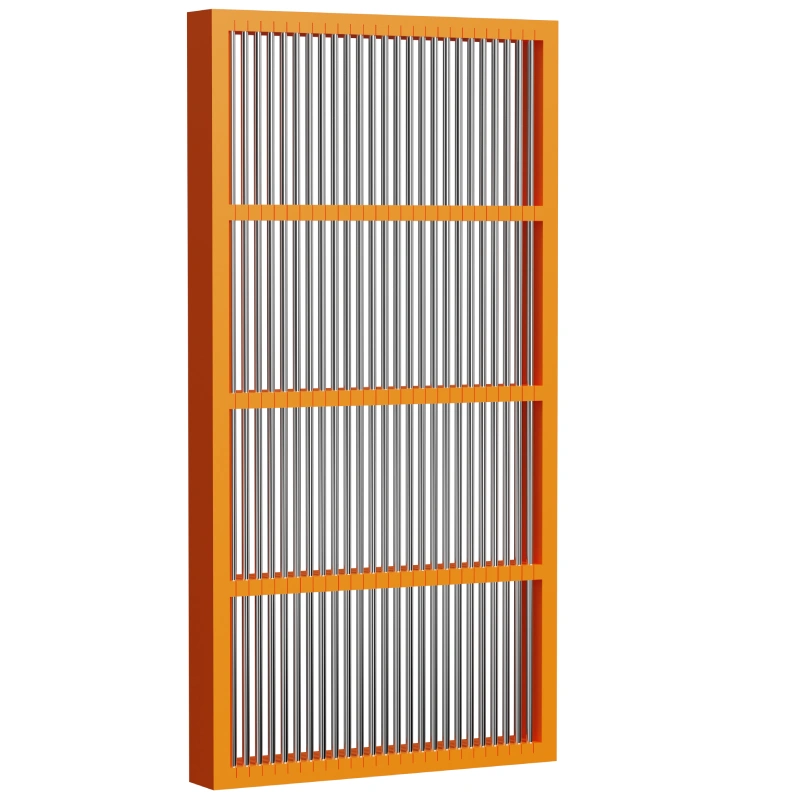
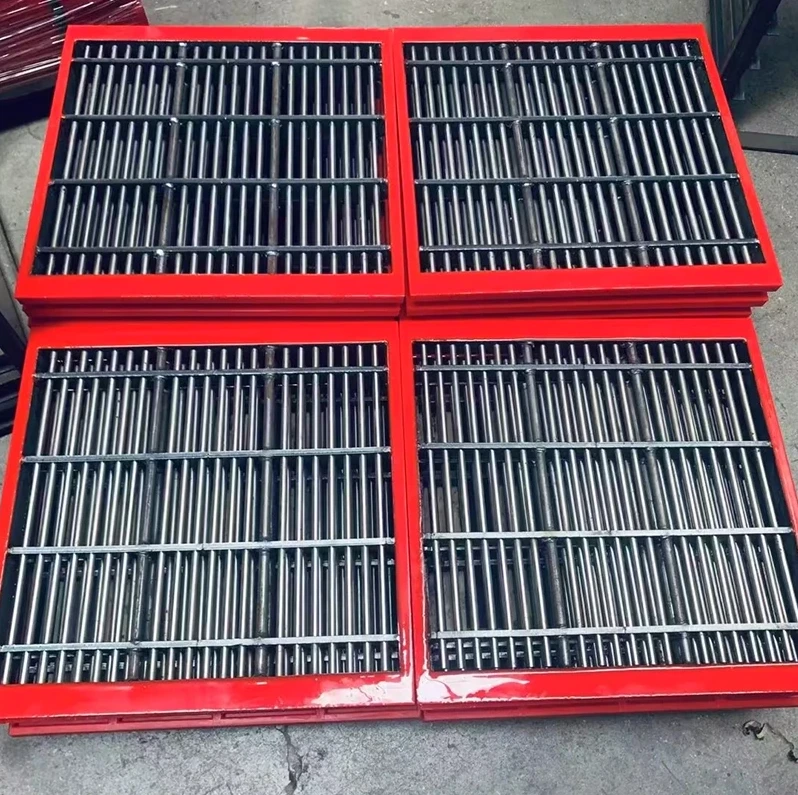
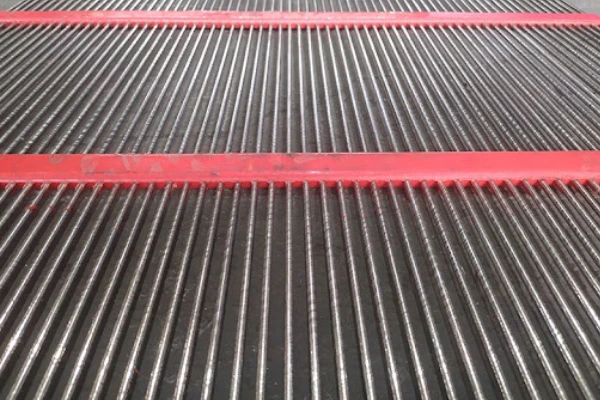
Elastic Rod Composite Screen Plate

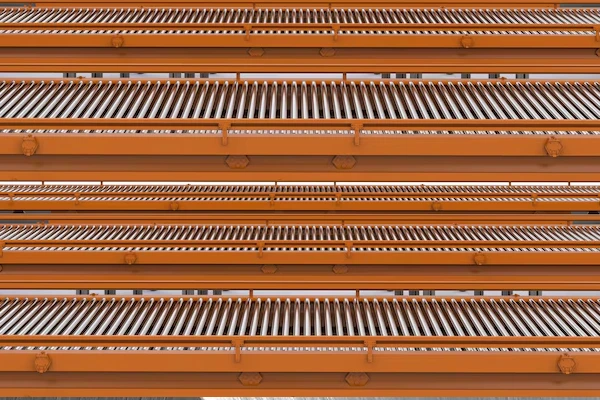
The Elastic Rod Composite Screen Plate features parallel spring steel rods with adjustable gaps. Achieves >90% sieving rate with ≤5% blinding. Quenched rods offer 3x wear resistance. Polyurethane support strips provide insulation and anti-static protection.

Product Detail

Self-Cleaning Mechanism: Under vibration, the elastic steel rods undergo “micro-bending” movement that shakes off materials stuck in the screen gaps—such as stone powder clumps in machine-made sand. This self-cleaning action keeps the screen surface open and maintains consistent performance, with a clogging rate of ≤5% . The gap width can be flexibly set by adjusting steel rod spacing to meet different particle size requirements.

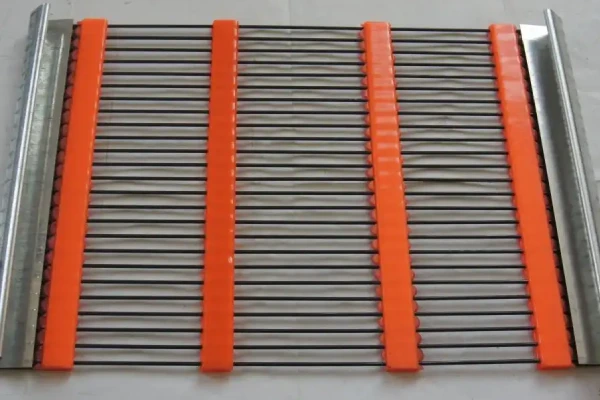
Enhanced Durability: The surface of the steel rods is quenched, providing wear resistance three times that of ordinary steel rods. The polyurethane support strips have excellent insulation properties and can be used in scenarios requiring electrostatic protection, such as coal screening where static discharge poses safety risks . The galvanized frame doubles rust resistance, extending service life in humid or corrosive environments.

Operational Advantages: The rods can rotate freely and move axially during operation, providing multiple degrees of freedom that enhance the self-cleaning effect . This design effectively solves problems of material stacking, adhesion, and hole clogging that commonly affect conventional screening of sticky or high-moisture materials.

Industry Applications

Mining & Mineral Processing (Copper Ore Screening)

Ideal for medium-coarse copper ore classification. The adjustable rod spacing accommodates varying feed sizes while quenched steel rods resist abrasion from hard ores. The >90% sieving rate maximizes throughput in pre-concentration circuits.
Aggregates & Sand Production (Stone Powder Removal)

Perfect for removing stone powder clumps from manufactured sand. The micro-bending rod action dislodges agglomerated fines, achieving ≤5% blinding rate even with moist feed. Cleaner sand product improves concrete workability and quality.
Chemical & Phosphate Processing (Phosphate Rock Pre-screening)

Suitable for pre-screening phosphate rock before chemical processing. Polyurethane support strips resist chemical attack while anti-static properties prevent dust accumulation and static discharge in enclosed environments.

FAQ

How does the self-cleaning mechanism work?

The elastic steel rods are not rigidly fixed; they are mounted with clearance holes in the support strips. Under vibration, each rod can: rotate freely around its axis, move axially (back and forth), and undergo micro-bending deflection . These three degrees of freedom create a “self-cleaning” action: rotation sheds adhered fines, axial movement prevents wedging, and bending dislodges near-size particles. Unlike rigid screens, the rods actively reject material that would otherwise clog conventional openings. The clogging rate is ≤5% even with sticky or high-moisture feeds.

Rod spacing (screen gap) is adjustable at the time of manufacture by positioning the rods with specific center-to-center distances. Typical gap ranges cover 1mm to 50mm depending on the application. Within a single screen panel, uniform gap spacing is maintained. For applications requiring multiple cut points, multiple screen decks with different rod spacings are used in series. Gap adjustment is specified during ordering based on your material’s target particle size.

Quenching involves heating the steel rods to high temperatures followed by rapid cooling, which transforms the steel’s microstructure to martensite—a hard, wear-resistant phase. Quenched spring steel rods achieve a hardness of 45-55 HRC, compared to 20-30 HRC for untreated steel. This hardness directly translates to wear resistance: quenched rods last 3x longer than ordinary steel rods in abrasive applications like copper ore screening or stone powder removal.

In applications such as coal screening or fine powder processing, static electricity can accumulate as particles rub against the screen surface . Static discharge creates safety hazards in potentially explosive atmospheres (coal dust, chemical dust). It also causes fine particles to cling electrostatically to the screen, accelerating blinding. The polyurethane support strips incorporate conductive additives (such as natural graphite) that dissipate static charge, preventing accumulation and improving safety and screening efficiency .

Yes. The modular design allows replacement of individual rods without discarding the entire screen panel. The removable side plate on the frame provides access to the rod ends . A damaged rod can be slid out and replaced with a new one, then secured by reinstalling the side plate. This field-repairable design reduces maintenance costs and extends overall screen panel life.

Send a Message