Flotation Machine Rotor
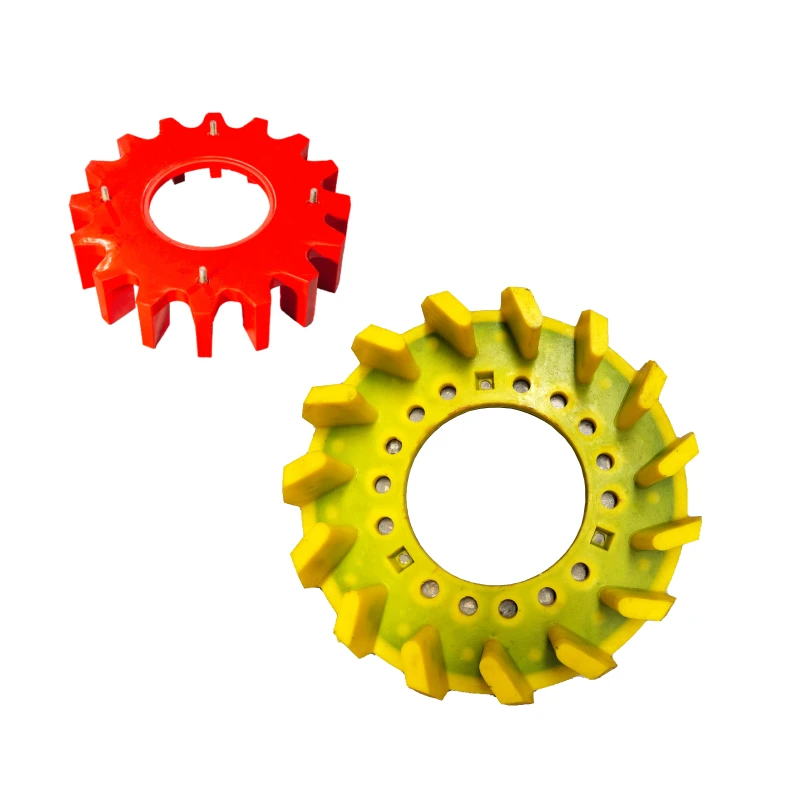
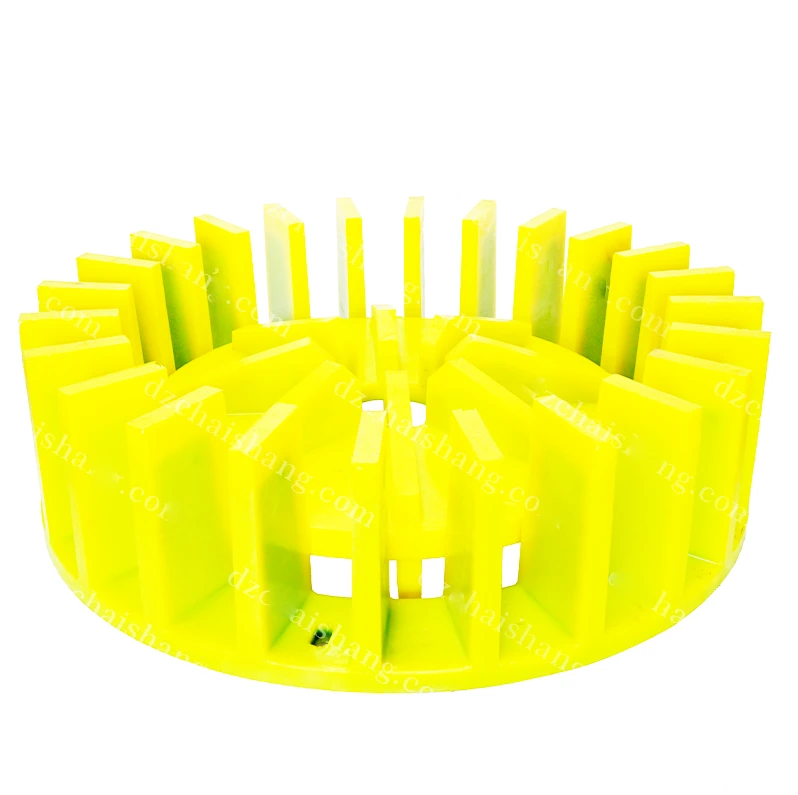
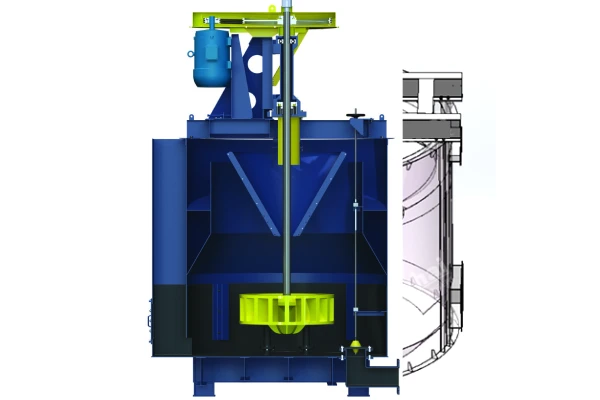
The flotation machine stator works with the rotor to stabilize flow and disperse air. Cuts bubbles to 0.1-0.5mm with >90% uniformity. Deflector trough design reduces turbulence. Modular structure cuts maintenance costs by 40%.
Product Detail
Superior Bubble Refinement: The stator cuts bubbles generated by the rotor to a diameter range of 0.1-0.5mm, with a bubble distribution uniformity exceeding 90%. This fine bubble size maximizes bubble surface area, significantly improving the probability of particle-bubble collision and attachment . The stator creates a zone of high shear between the rotor periphery and stator vanes, aiding in the formation of fine air bubbles .
Deflector Trough Design: The stator incorporates a specialized deflector trough structure that channels pulp flow outward and downward, reducing turbulence intensity and minimizing coarse particle sedimentation . This design promotes good zonal separation within the cell—maintaining intense turbulence in the lower regions where particle suspension is critical while keeping the upper flotation zone quiescent to prevent mineral detachment from froth .
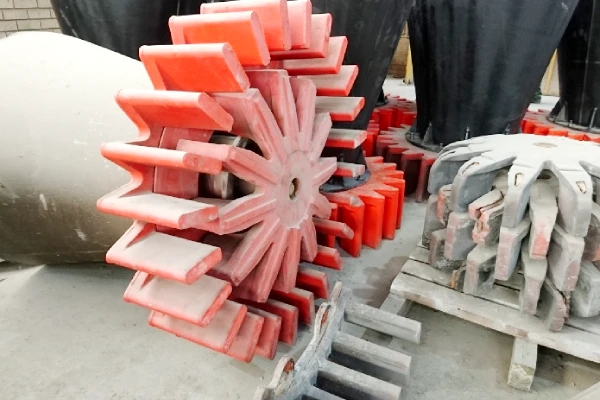
Modular Construction: The stator features a modular structure that facilitates local replacement of worn parts without replacing the entire assembly. This significantly reduces maintenance costs by up to 40% while minimizing equipment downtime . The modular design also simplifies installation and allows for stator optimization to match specific ore characteristics.
Durability & Wear Resistance: Advanced materials and protective treatments extend stator service life in abrasive flotation environments:
Rubber lining: Provides excellent wear and corrosion resistance
Rubber lining treatment: Protects against mineral slurry abrasion
Metallic skeleton: Ensures structural integrity and balance
Optimized stator design reduces energy consumption by 4-7 kW per cell while maintaining slurry suction and air dispersion characteristics

Industry Applications

Copper-Molybdenum Polymetallic Separation
Ideal for complex Cu-Mo separation circuits where fine bubble generation (0.1-0.5mm) and uniform distribution (>90%) are critical for selective flotation of different mineral species.

Refractory Mineral Flotation
Perfect for processing difficult-to-float ores with fine liberation sizes. The deflector trough design reduces turbulence, preventing coarse particle sedimentation and improving recovery of refractory minerals.

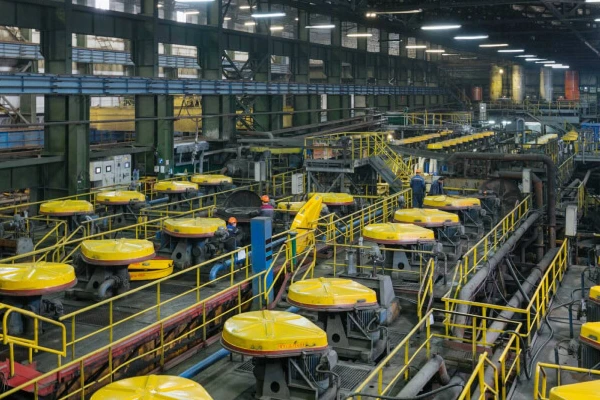
Large-Scale Concentrators (≥10m³ Cells)
Suitable for high-capacity flotation circuits with single cell volumes ≥10m³. Optimized stator design reduces energy consumption while maintaining flotation performance
FAQ
How does the stator work together with the rotor?
The rotor acts as a pump, drawing slurry upward and outward while dispersing air bubbles. The stator surrounds the rotor and serves three critical functions:
Flow straightening: Eliminates the rotational component of slurry flow from the rotor, converting it to radial discharge
Bubble shearing: Creates high-shear zones that cut large air bubbles into fine 0.1-0.5mm bubbles
Flow direction: Deflector troughs channel pulp outward and downward, promoting zonal separation within the cell
Without a properly designed stator, swirling flow would inhibit stable froth formation and reduce flotation recovery.
What is bubble distribution uniformity and why does >90% matter?
Bubble distribution uniformity measures how evenly air bubbles are dispersed across the flotation cell cross-section. A uniformity >90% means that nearly all areas of the cell receive adequate bubble supply.
Why it matters:
Uniform recovery: All ore particles have equal opportunity to contact bubbles
Stable froth: Prevents “dead zones” with no flotation and “hot spots” with excess turbulence
Consistent grade: Minimizes variation in concentrate quality across the cell
Poor uniformity (<70%) leads to short-circuiting, where some slurry passes through without adequate bubble contact, reducing overall recovery.
How does the deflector trough design improve flotation performance?
The deflector trough features a hydrofoil surface that redirects slurry flow at approximately 15° downward from horizontal . This provides several benefits:
Turbulence confinement: Maintains intense mixing only in the lower cell region where particle suspension is needed
Quiescent zone creation: Allows formation of a calm zone above the turbulent region where attached particles rise without being knocked off
Froth stability: Prevents turbulence from disturbing the froth layer where mineral-laden bubbles are collected
Reduced particle sedimentation: Downward flow direction prevents coarse particles from settling on the cell bottom
Can the stator be retrofitted to existing flotation machines?
Yes. The stator can be customized to fit most major flotation machine brands, including Wemco, Denver, Outotec, FLSmidth, XCF, KYF, JJF, and XJQ models . Field retrofit examples include converting KYF-8 flotation cells to XCF-8 suction-type stators, which improved maintenance accessibility and extended wear part life by nearly 20% .
Provide your existing stator dimensions, blade configuration, and mounting specifications for a retrofit recommendation.
How does stator blade design affect energy consumption?
Recent CFD studies on the XCF-50m³ flotation cell stator demonstrate that blade configuration directly impacts energy consumption:
Blade count reduction: Reducing from 24 to 20 blades decreased energy consumption by 4-7 kW
Optimized profile: Blade with bottom width 50mm and top width 30mm maintained flow field and air dispersion characteristics
Performance maintained: Slurry suction capacity and air dispersion remained essentially unchanged with optimized design
This represents a 10-15% energy saving per cell with no flotation performance loss.