
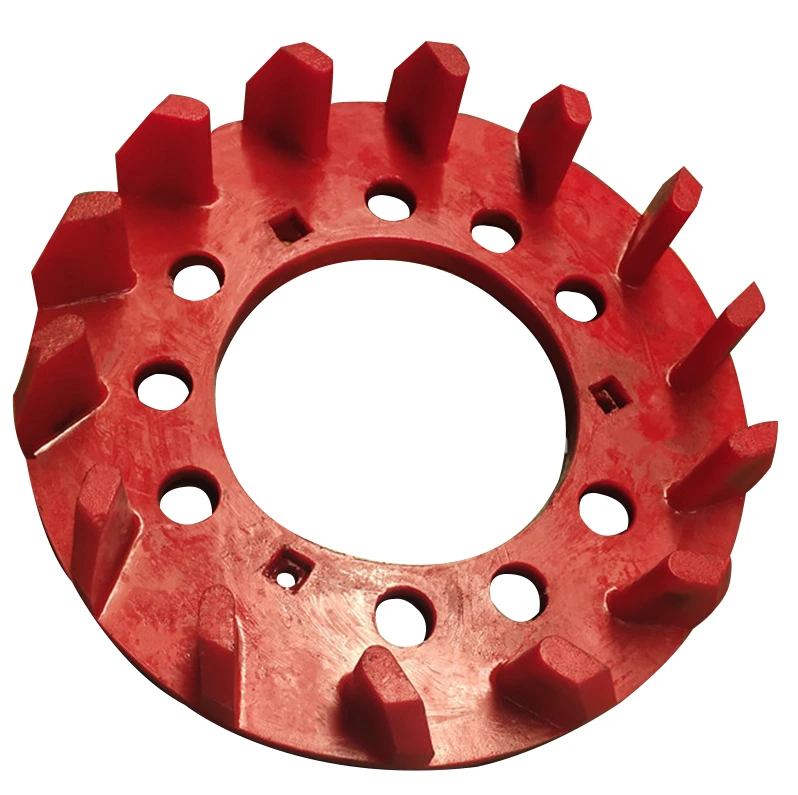
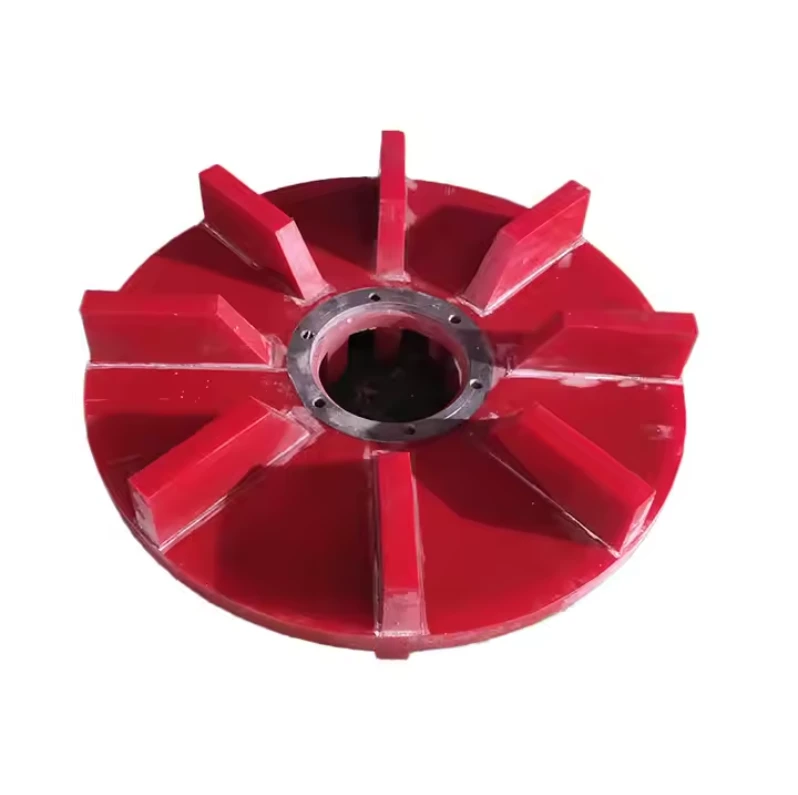
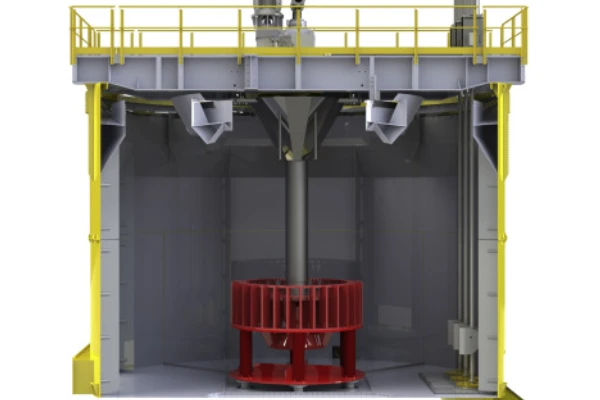

Flotation Machine Impeller
The flotation machine impeller is precision-cast from high-hardness alloy with customizable blades (closed reduces leakage, open enhances uniformity). High-nickel-chromium alloy resists erosion, delivering 3-4x longer life than cast iron. Suitable for various pulp viscosities.
Product Detail
Superior Material Durability: The high-nickel-chromium alloy is engineered to resist erosion and abrasion, significantly extending service life. Industrial applications confirm that high-chromium wear-resistant alloy materials deliver 3-5 times longer service life than ordinary alloy cast steel in abrasive flotation environments . This translates to 3-4 times longer life than ordinary cast iron impellers, reducing replacement frequency and maintenance downtime.
Customizable Blade Design: The impeller blades can be customized according to specific operating conditions:
Closed structure: Reduces pulp leakage, ideal for applications requiring precise flow control
Open blades: Enhances stirring uniformity, suitable for coarser or denser pulps
Adjustable blade count: Allows optimization for different pulp viscosities and aeration requirements
Wear Identification & Monitoring: Industry research indicates that impeller wear can be effectively monitored through four operational indicators: changes in motor current draw, reagent consumption rates, concentrate ash content variations, and aeration capacity measurements . Regular inspection of these parameters ensures timely maintenance intervention.
Industry Applications

Precious Metal Flotation
Ideal for gold and silver ore flotation where high-nickel-chromium alloy resists erosion from abrasive gangue minerals. The 3-4x longer life reduces downtime in high-value circuits.
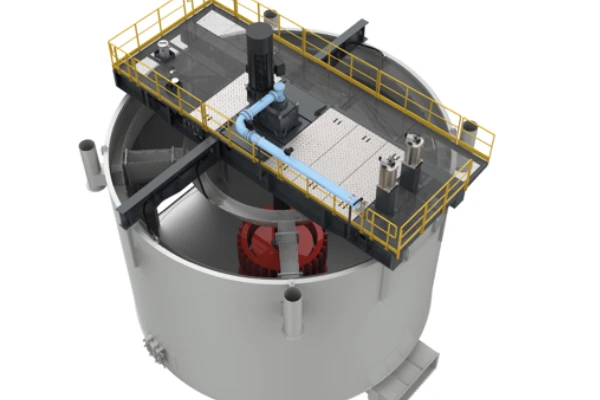
Coal Slime Deashing
Perfect for coal slime flotation to remove ash content. Adjustable blade configurations adapt to varying pulp viscosities, while closed blade design minimizes leakage for consistent performance.
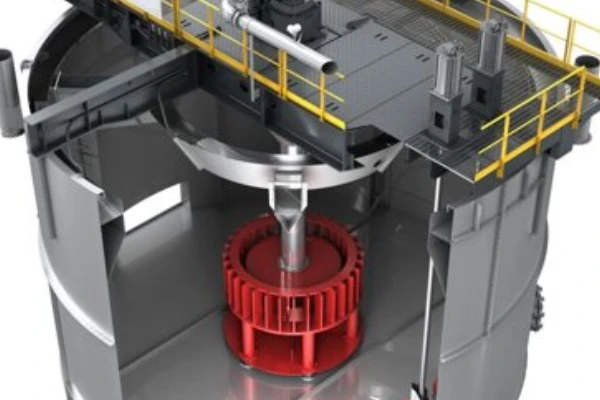
Flash Flotation & Aerated Mechanical Cells
Suitable for flash flotation circuits and aerated mechanical stirring flotation machines. Customizable blade options optimize performance across different cell designs and operating conditions.

FAQ
What is the advantage of high-nickel-chromium alloy over cast iron?
High-nickel-chromium alloy offers superior erosion and abrasion resistance due to its hardened microstructure. Research confirms that high-chromium wear-resistant alloy provides 3-5 times longer service life than ordinary cast steel in abrasive flotation environments . For impeller applications, this translates to:
3-4x longer service life than cast iron
Reduced replacement frequency and maintenance downtime
Consistent geometric precision throughout extended operation
Better resistance to chemical corrosion from reagents and pulp
Why would I need to adjust the number of blades?
Blade count affects both power consumption and hydrodynamic performance. Industry practice shows that:
Fewer blades (e.g., 6-8): Lower energy consumption, suitable for free-flowing pulps
More blades (e.g., 12-16): Higher shear intensity, better for high-viscosity or fine particle pulps
Adjustable blade count allows operators to optimize for specific ore types and pulp conditions without replacing the entire impeller assembly
Can this impeller be retrofitted to existing flotation machines?
Yes. The impeller can be customized to fit most major flotation machine brands and models, including:
XJM-S series mechanical stirring flotation machines
Flash flotation cells
Aerated mechanical stirring flotation machines
XJK, SF, BF series cells
Provide your existing impeller dimensions, blade configuration, and mounting specifications for a retrofit recommendation.
Is this impeller suitable for high-viscosity pulps?
Yes. The impeller’s adjustable blade count allows optimization for different pulp viscosities. For high-viscosity applications:
Open blade designs provide better flow-through characteristics
Increased blade count (14-16 blades) generates higher shear to break up viscous zones
High-nickel-chromium alloy maintains erosion resistance even in thick, abrasive slurries
How does the impeller contribute to flotation recovery?
The impeller is fundamental to three key flotation mechanisms:
Solid suspension: Keeps all particles in contact with bubbles
Air dispersion: Creates fine, uniform bubbles for maximum surface area
Reagent mixing: Ensures uniform chemical conditioning across the cell
A properly designed impeller—with appropriate material, blade configuration, and maintenance—directly improves recovery rates while reducing energy consumption and reagent usage.