
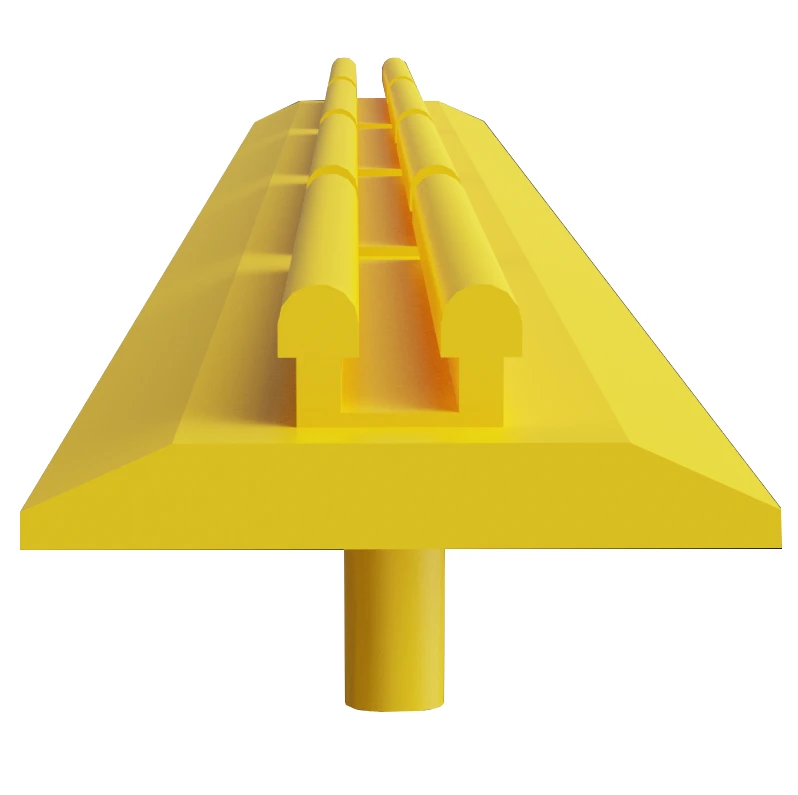


Rail Support
The rail support features a polyurethane matrix with embedded steel frame. Reduces vibration transmission by 30% to prevent resonance. Service life 2-3x longer than metal rails. Load capacity >800kg per unit. ±2mm installation tolerance.
Product Detail
Superior Vibration Damping: The polyurethane matrix reduces equipment vibration transmission rate by 30%, effectively preventing machine body resonance that can damage screening equipment and reduce performance. This damping characteristic extends the service life of both the rail support and the screening machine itself.
Extended Service Life: The surface wear-resistant layer undergoes special treatment, delivering a service life 2-3 times longer than metal rail supports in abrasive screening environments. Polyurethane’s inherent abrasion resistance and flexibility prevent the cracking and fatigue failure common with all-metal supports under continuous vibration.
High Load Capacity: The embedded steel frame ensures robust load-bearing strength. Each rail support can bear a load exceeding 800kg, making it suitable for heavy-duty screening applications with large material volumes and high impact forces.
Industry Applications

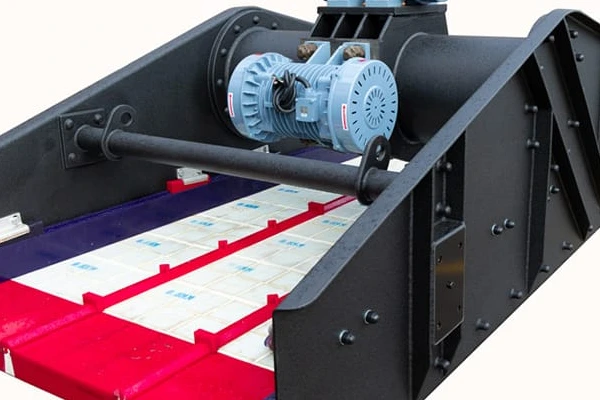
Vibrating Screen Frame Support
Ideal for supporting screen frames in high-frequency vibrating screens. The 30% vibration reduction prevents resonance damage while polyurethane construction outlasts metal rails by 2-3x in abrasive mineral processing.
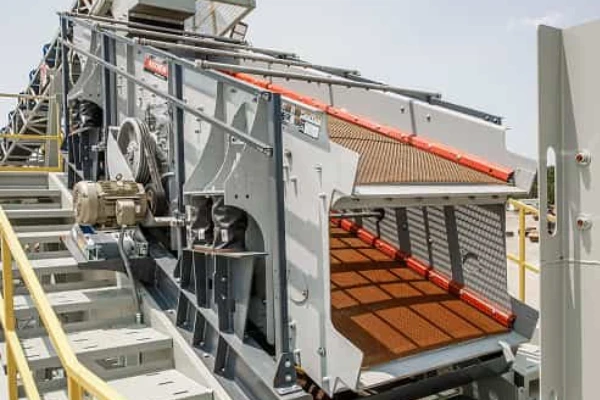
Centrifuge Screen Frame Guidance
Perfect for guiding screen baskets in centrifuge equipment. The ±2mm installation tolerance simplifies replacement while 800kg+ load capacity handles high centrifugal forces.
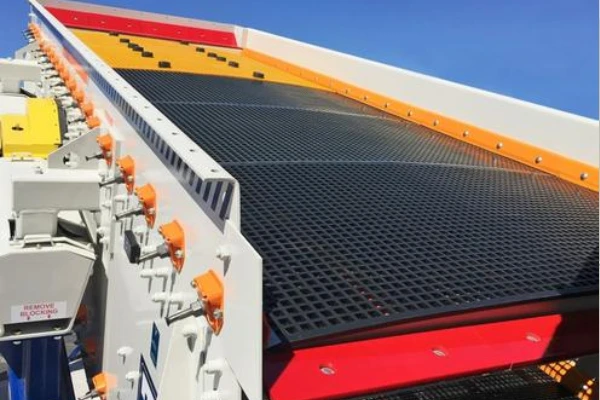
Heavy-Duty Screening
Suitable for Derrick, Sandvik, and equivalent screening equipment. The composite structure maintains alignment under heavy loads while the wear-resistant layer extends service intervals.

FAQ
How does the polyurethane matrix reduce vibration transmission by 30%?
Polyurethane has inherent viscoelastic properties that absorb and dissipate vibrational energy. When vibration passes from the screen frame through the rail support to the machine body, the polyurethane matrix:
Compresses elastically under dynamic loads, converting mechanical energy to heat
Dampens harmonic frequencies that would otherwise cause resonance
Isolates high-frequency vibrations that fatigue metal components
This 30% reduction in vibration transmission prevents resonance conditions that can crack screen boxes, loosen fasteners, and reduce screening efficiency. The damping effect is particularly valuable in high-frequency vibrating screens operating at 50-60Hz.
Why does the rail support last 2-3 times longer than metal rails?
Metal rail supports fail due to three primary mechanisms in screening applications:
Fatigue cracking: Cyclic loading causes progressive crack growth
Abrasive wear: Sand and mineral particles erode metal surfaces
Corrosion: Moisture and chemicals attack unprotected steel
The polyurethane matrix addresses all three failure modes:
No fatigue failure: Polyurethane’s elastic deformation does not accumulate fatigue damage
Wear resistance: Polyurethane offers 8-10x better abrasion resistance than steel
Corrosion immunity: Polyurethane never rusts or corrodes
The embedded steel frame provides load-bearing strength while being fully encapsulated and protected from the environment. Field data confirms 2-3x longer service life in abrasive mineral processing applications.
How is the 800kg+ load capacity achieved with polyurethane?
The load capacity comes from the composite structure, not polyurethane alone. The embedded steel frame—typically fabricated from high-strength carbon steel with anti-rust treatment—provides the structural backbone that bears the 800kg+ load. The polyurethane matrix serves three functions around this steel core:
Protects the steel frame from corrosion and abrasion
Dampens vibration before it reaches the steel frame
Provides a wear-resistant surface that contacts the screen frame
This combination delivers the load capacity of steel with the vibration damping and wear resistance of polyurethane.
Does the embedded steel frame rust over time?
No. The steel frame undergoes anti-rust treatment (typically zinc plating or epoxy coating) before being encapsulated in the polyurethane matrix. The polyurethane then provides an additional barrier layer, completely sealing the steel from exposure to:
Moisture and slurry
Chemical reagents used in flotation or leaching
Salt spray in coastal installations
Even if the polyurethane surface becomes damaged in service, the underlying anti-rust treatment provides secondary protection. Field inspections show no rust-related failures on properly manufactured composite rail supports within the expected 2-3x service life window.
Does the 30% vibration reduction affect screening efficiency?
No—it improves it. Proper vibration management enhances screening efficiency by:
Maintaining consistent amplitude: Reduced resonance means the screen box vibrates as designed
Preventing energy loss: Vibration energy stays in the screen deck rather than transmitting to the support structure
Reducing structural fatigue: Less stress on screen box components extends equipment life
The rail support dampens harmful vibration transmission without reducing the useful vibration amplitude that drives material stratification and particle passage. This selective damping—reducing unwanted frequencies while preserving beneficial ones—is a key advantage of polyurethane rail supports over rigid metal alternatives.